DIY Roof Moss Removal: What Victoria Homeowners Should Know
A practical safety and roof-material checklist for Victoria homeowners deciding whether roof moss removal is a DIY job.
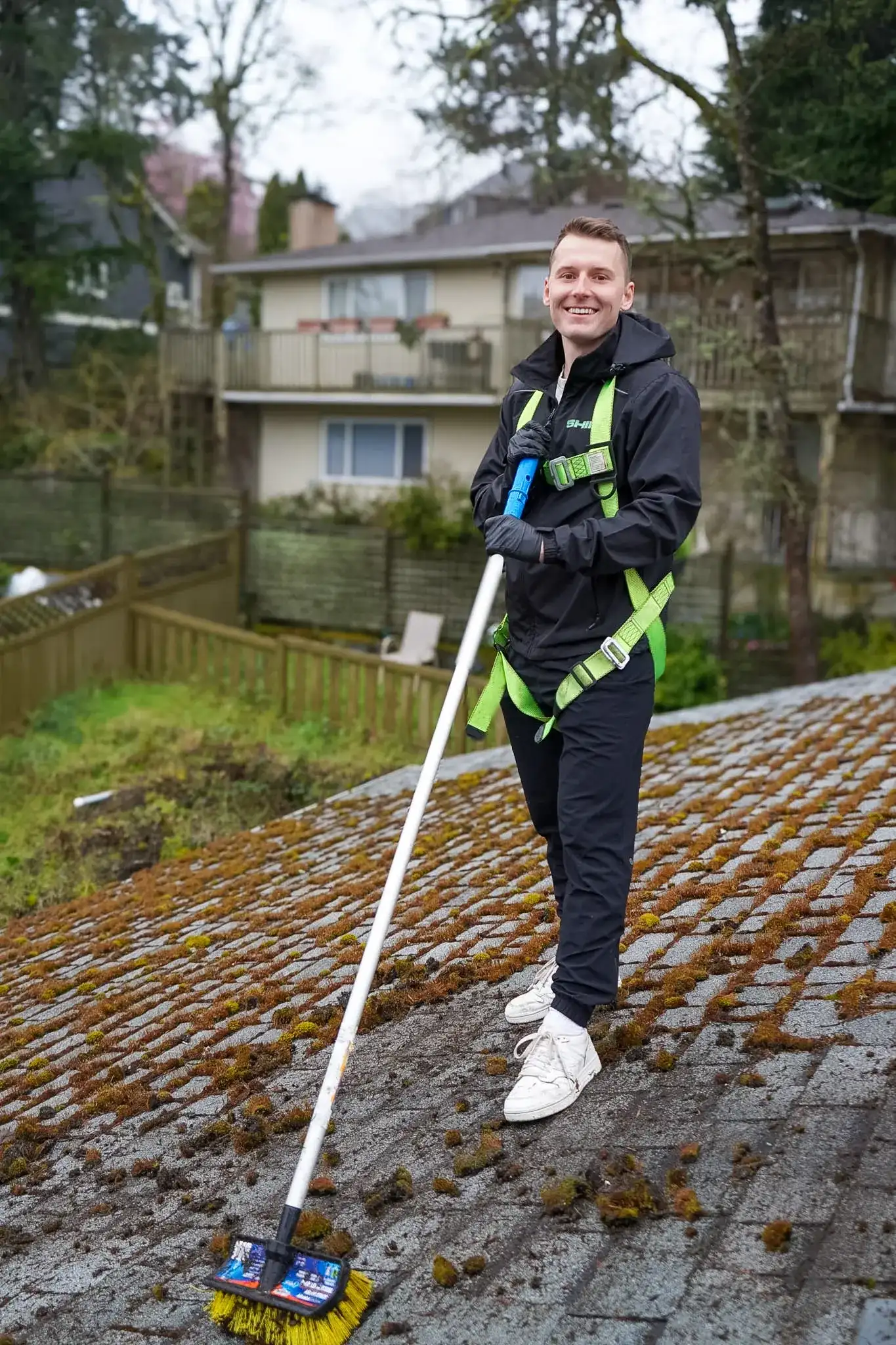
You can inspect moss from the ground and reduce some of the conditions that help it grow. Cleaning a pitched roof is different: the surface can become extremely slippery, the method must suit the roofing material, and a mistake can damage both the roof and the person doing the work.
Before treating roof moss as a weekend pressure-washing job, work through the material, access and safety questions below.
First question: what kind of roof is it?
Asphalt shingles, metal roofing, concrete tile and cedar do not share one cleaning method. Start with the roof manufacturer’s maintenance instructions, especially if a warranty may still apply.
For asphalt shingles, the Asphalt Roofing Manufacturers Association says never to use a pressure washer. High pressure can cause granule loss and shorten the service life of the roofing. Its separate algae-cleaning bulletin says other chemicals or methods need the shingle manufacturer’s approval and directs readers to that manufacturer for moss-removal recommendations.
A technique that is safe for a driveway is not automatically safe for a roof. “Low pressure” and “soft wash” are descriptions, not proof that a product, concentration or application method is suitable for every material.
Second question: can the work be reached safely?
Wet growth, treatment solution and loose debris all make a roof more slippery. The risk starts before the cleaning begins: ladder setup, moving tools, crossing an edge and returning to the ladder are each separate fall hazards.
WorkSafeBC identifies falls from roofs and ladders as a source of serious injuries and points to planning, training and appropriate fall protection as the controls. Its ladder guidance also covers securing a ladder, using firm level ground and extending access ladders above the roofline.
Reading a ladder checklist does not create the training or equipment needed for roof work. If safe access, fall protection or the route back to the ladder is uncertain, stop at a ground-level inspection.
What can you do from the ground?
Several useful steps do not require climbing:
- Photograph every roof face from a safe position, including the shaded side.
- Note whether the material is raised green growth or flat dark staining.
- Look for debris collecting in valleys, behind chimneys or beneath branches.
- Watch the gutters during rain and record where water overflows.
- Find the roof or shingle manufacturer and read its maintenance instructions.
- Ask a qualified tree professional about branches that shade or drop debris onto the roof.
These observations make a professional quote more accurate and can reveal when the real problem is drainage, tree debris or a roof defect rather than cleaning alone.
Why not scrape or pressure wash the visible patch?
A small patch can be the most tempting place to experiment, but visible growth is only part of the decision. Aggressive washing can damage shingles, while working upward against the shingle courses can force material where it should not go. The loosened moss also has to be kept out of gutters and downspouts.
ARMA’s maintenance guidance recommends non-abrasive removal of accumulated roof debris and warns against pressure washing asphalt shingles. It also advises protecting landscaping and surrounding materials when an approved cleaning solution is used.
Shine’s own roof moss removal process is not pressure washing. It begins with a roof and access assessment, uses hand work on safely accessible areas, treats remaining growth, then clears the gutters and checks downspout flow. That scope is specific to our service; it is not a universal instruction for DIY work or every roof material.
What should you ask a roof-cleaning contractor?
A useful quote should answer more than “how much?” Ask:
- Which roof material and condition is the method intended for?
- Will any part of the roof be pressure washed?
- How will workers be protected from a fall?
- What happens if the roof is too worn or unsafe to clean?
- Are gutters and downspouts dealt with after debris comes off?
- Which stains, repairs or inaccessible sections are excluded?
- Is the company insured and registered with WorkSafeBC?
Be cautious with a guarantee that ignores shade, tree cover, roof condition and future maintenance. Moss can return when the conditions that support it remain; a contractor should state exactly what is covered instead of implying that an outdoor surface will stay permanently clear.
When is professional assessment the sensible choice?
Ask for an assessment when the roof is steep, high, wet, difficult to access, heavily covered, visibly worn or made from a material whose cleaning instructions you do not know. A professional may also tell you that the roof needs a roofer rather than a cleaner.
For professional help in Greater Victoria, our roof moss removal in Victoria and Saanich page explains the method, included gutter cleanup and typical pricing. You can request a roof-moss quote with your contact and property details, and keep any ground-level roof photographs ready to discuss with the team. We will quote the work that fits the observed condition and tell you when cleaning is not the right answer.
Sources: WorkSafeBC fall and ladder guidance; Asphalt Roofing Manufacturers Association moss and algae maintenance guidance. Always follow the roofing and product manufacturers’ current instructions.